


Brighstone bean
$4.00
(Phaseolus vulgaris)
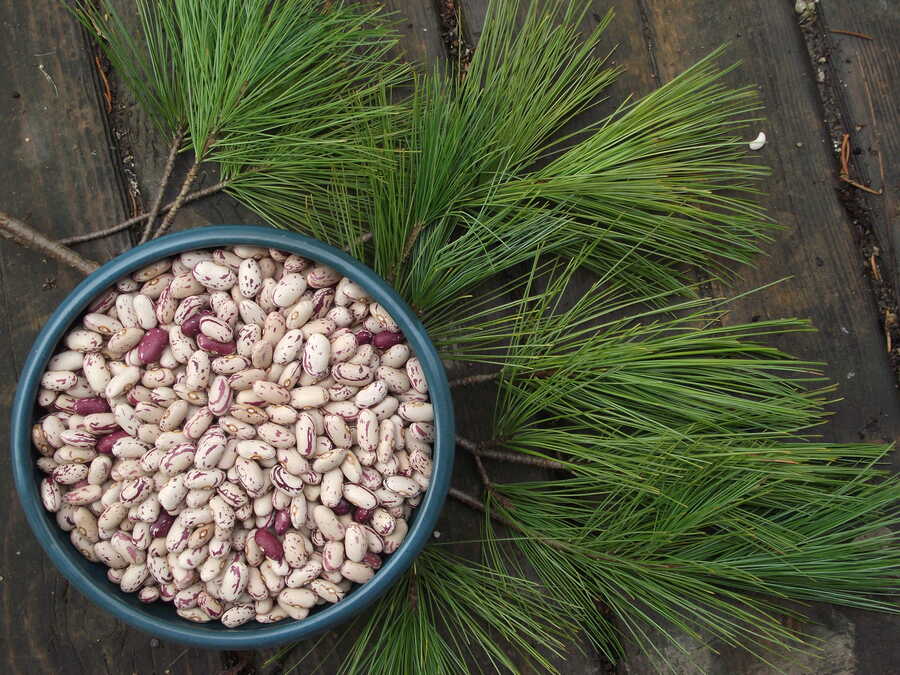
Bush dry bean. Easy to grow, white seeds with dark speckling. A British variety, preserved by the Heritage Seed Library in the UK, where it has been enjoying a bit of a resurgence. The story that circulates with it is that it was salvaged from a shipwreck on the Isle of Wight in the 1800s. But maddeningly, no one seems to know the name of the ship or date of the wreck, so this story may or may not be true (But if it were, wouldn’t you want to preserve more of the story with the bean? Says the history nerd writing this description).
The village of Brighstone, however, is situated on Brighstone Bay, on that stretch of the southwest coast of the island which is called the Back of the Wight. Being a long shore facing the prevailing winds with no great harbours, it is a place which has known many shipwrecks over the centuries. Indeed this coastline was once home to two lifeboat stations, Brighstone Grange and Brooke, run by the Royal National Lifeboat Institution, and also one of the oldest lighthouses in Great Britain, St. Catherine’s Oratory. Therein lies an interesting story. In 1314 a local nobleman, Walter de Godeton, the Lord of Chale, was convicted for stealing a cargo of wine off a ship which had wrecked on the coast. It was carrying the wine for a monastery, no less. So the Church offered de Godeton two options: excommunication, or that he build a lighthouse overlooking the wreck site. With an endowment for a priest to reside there, tending the light and saying Masses for those lost at sea. He chose the lighthouse, which was completed in 1328.
NOTE: Beans did not arrive in England until sometime in the mid-1500s, so this bean has nothing to do with de Godeton’s shipwreck.
30 seeds/packet.
In stock
Plant after last frost; soil must be warm or seed will rot. Sow bush beans 1” deep, 3” apart in rows 2′ apart. Pick dry beans when pods are fully dry; seed must be dry enough to not dent with a fingernail for storage. You can also cut whole plants and dry them that way. Dry beans can be further dried on a tarp, then threshed by treading on them and winnowing away the chaff.