


Shetland kale
Price range: $4.00 through $10.00
(Brassica oleracea)
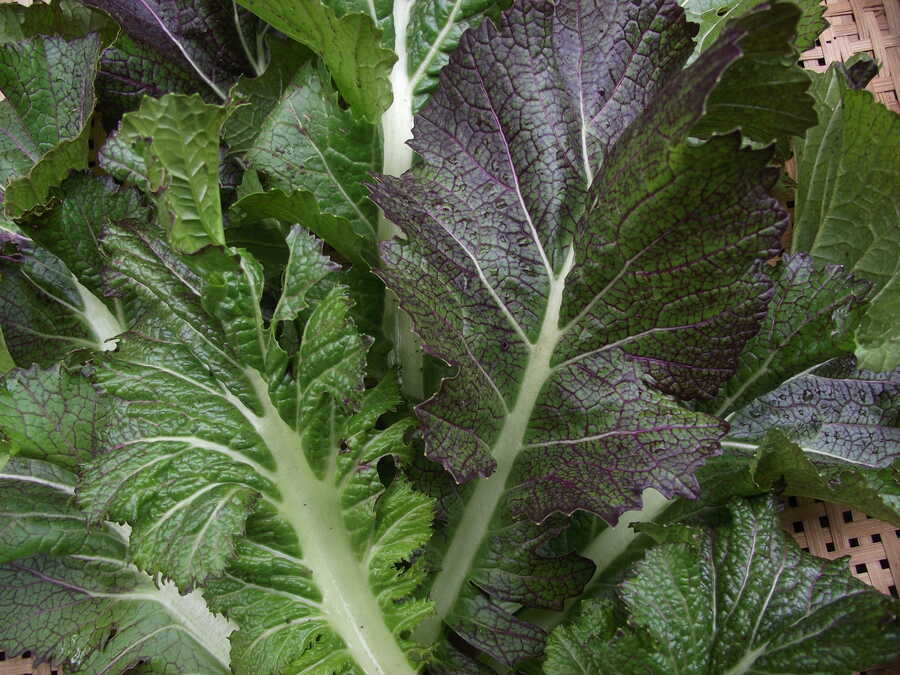
The Shetland Islands, north of Scotland, have a harsh climate with very long winters. Few vegetables can be grown there, but one which is hardy enough to survive and thrive is this kale! An old landrace whose flat green leaves are tinged with purple, Shetland kale has been grown on the islands for at least 400 years, possibly longer. So it is probably one of your best chances to experience a common vegetable mainstay of the Medieval (and earlier) world. The outer leaves were fed to sheep or cattle, and the tender central leaves were eaten by the humans. To survive powerful winter winds, temperature extremes, and depredations of rabbits, it was traditionally grown in a stone-walled enclosure called a crö (what we call a plantie crub in English [well, not the English I grew up with, but our language is broad and adaptable!]). To get a taste for the language and culture of the kale’s people, I would recommend Basil Anderson’s poem, “Auld Maunsie’s Crö.” To better understand the agricultural rhythm of historical kale culture in the Shetland Islands, I recommend this article from the Norwegian Archaeology journal SPOR; however, knowledge of Norwegian (or the ability to translate it) is required!
Listed in the Slow Food Ark of Taste.
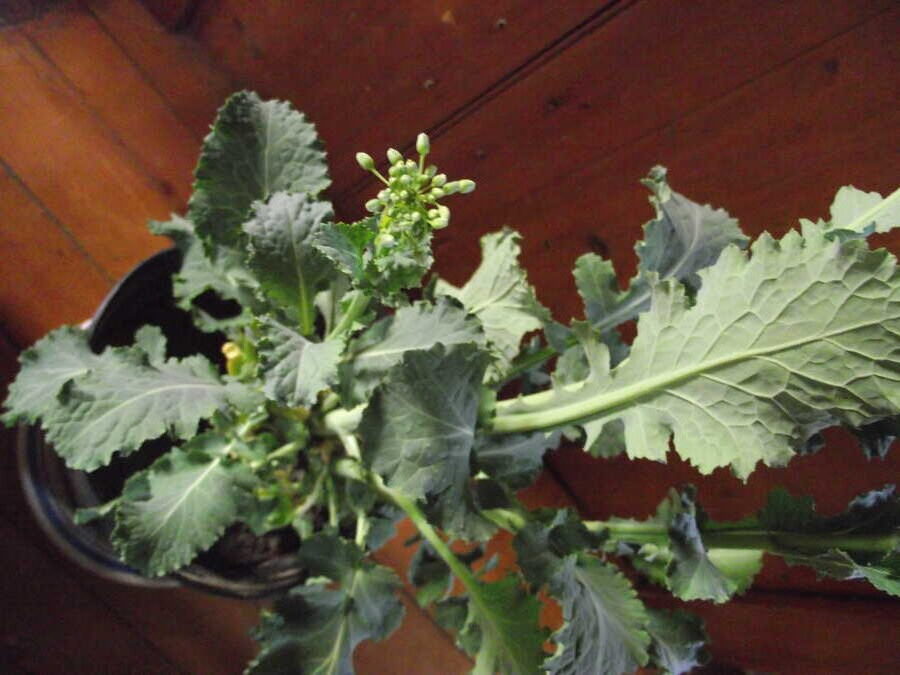
Biennial. Start indoors or sow in early spring, 3/8” deep, 3/8” apart in rows 18” apart; thin or transplant to 18″ apart in the row. If transplanting, burying to the bottom of the first leaves’ stems. Mulch close up around stem and toss hay lightly over crown to protect for winter use. Alternately, learn the Shetlanders’ traditional system of triennializing this kale to deal with their extreme climate!