
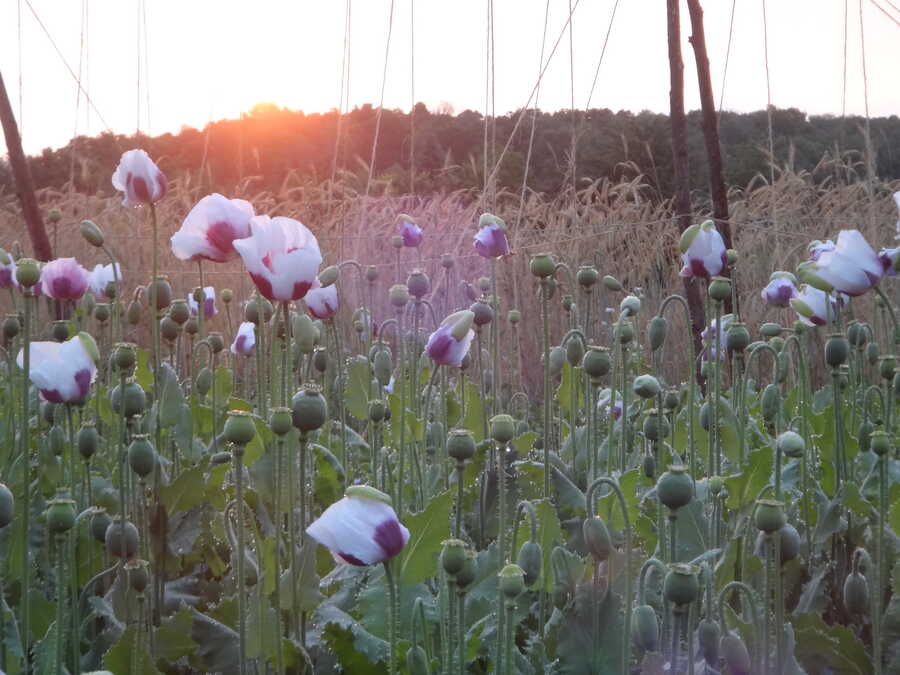


Nagyszékely poppy
$4.00
(Papaver somniferum)
A landrace from Nagyszékely, Hungary. It is cultivated for its beautiful blue seeds, which are delicious and an excellent source of oil and protein. But it also has beautiful flowers in shades ranging from violet to pink. We mostly grow spring-planted oilseed poppies, but this one gives gardeners more options, because it can be fall-planted, about the same time as wheat (September 20th in my area). I received it with some plants vented, that is, the pods scatter their seeds, and some ventless; I am selecting for ventless ones.
I received this poppy from Judit Fehér.
The European Cooperative Programme for Plant Genetic Resources (ECPGR) is a network which connects genebanks and seed savers across Europe. Basically they identify problems facing our food system and ask how the seeds they conserve can help address those problems. From 2017-2020 they ran a program called Farmer’s Pride, https://www.ecpgr.org/in-situ-landraces-best-practice-evidence-based-database profiling landrace crops and promoting what we seed geeks call “in situ preservation” (i.e. keeping them a living part of a local culture, preserved by people who actually use them – as opposed to ex situ preservation where they are maintained by curators in a seed collection somewhere). I was searching for a fall-planted poppy, and noticed this one profiled https://www.ecpgr.org/in-situ-landraces-best-practice-evidence-based-database/landrace?landraceUid=13546 on the project. So I contacted Magház, https://www.maghaz.hu/ the Hungarian seed-savers community network, and they put me in touch with Judit. Thanks to all those who helped me! For me, it is a story highlighting the friendliness and mutual support we can offer each other across borders through the sharing of seeds.
In stock
Plant late fall or early spring; sprinkle seed and cover 1/4”, firm soil; need darkness to germinate. Thin to 6-8” apart when first true leaves grow. Allow seed pods to dry on the plant until the seeds rattle inside them and they break cleanly from their stalks when you try to pick them. Then break them from the stalks, crack open the capsules and sieve to separate seeds. When seed is thoroughly dry, store in an airtight container.