
Nadmorska rutabaga
Price range: $4.00 through $10.00
(Brassica napus)
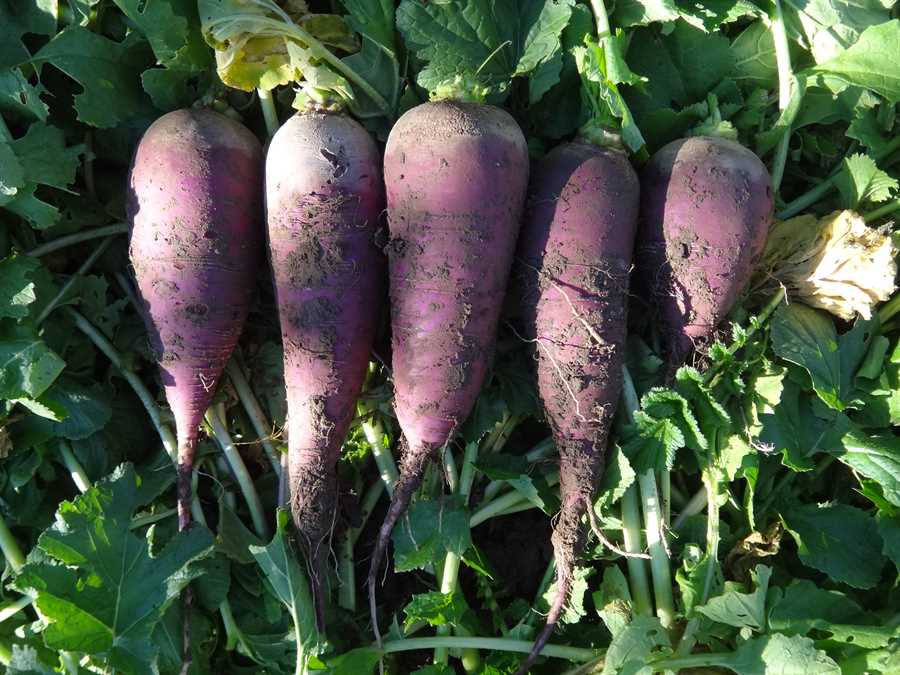
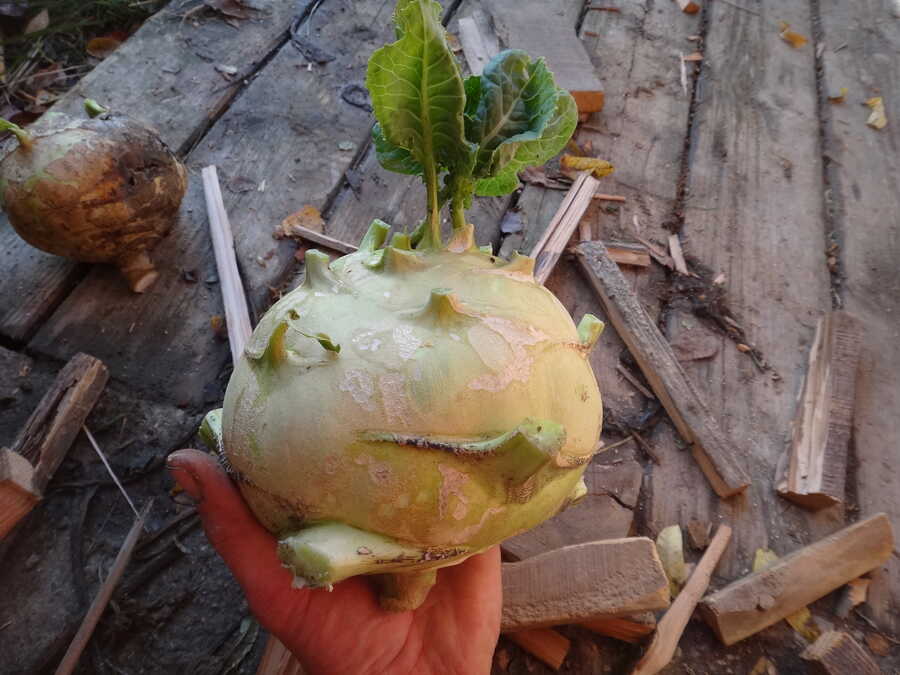
From Lithuania, a green-topped, yellow-fleshed rutabaga. This was the variety which convinced my family that we like rutabaga, after years of avoiding them! Pleasantly nippy flavour as a raw vegetable, but really shines grated in a stir-fry. Stores well.
The poor rutabaga (also called the Swede turnip, due to its apparent origin in Sweden, where they call it kålrot) is an underappreciated vegetable. Many do not like its flavour. But this is not an inherent characteristic. Instead, rutabaga is one of those special crops where variety makes all the difference. And for some reason, quite unfathomable to me, the varieties commonly sold in grocery stores happen to be some of the worst tasting. While learning more about the rutabaga, I was amused to discover that this is not just my opinion! It’s true, with a study to back it up (you can find a study to back up anything nowadays). In 2018, Kålrotsakademien, the “Rutabaga Academy” (yes, the Swedes have one!) organized a tasting of 50 different rutabagas at the Grand Hôtel in Stockholm. In ECPGR’s newsletter Landraces (Issue 6, p.11) they reported:
“The test panel reported a very large, and pronounced, variation in taste, scent and texture. As a result of the sensory mapping, the tested swede accessions could be divided into the following three sensory groups:
a) More woody, bitter and peppery, with a tinge of earth and stable. Less fruity, fresh, sweet, crispy and/or watery;
b) Sweeter, firm, woody and fruity. Less tart, crunchy, peppery and/or bitter;
c) More crisp, watery, fresh and tart. Less spicy, bitter, earthy and/or woody
The most highly rated swede of all was ‘Nusnäs’, a local cultivar from Dalarna in Central Sweden. To our surprise, many of the fodder swede roots received good sensory grades. We also noted that the variety lowest in rank in terms of palatability was the variety that completely dominates commercial production of swede in Sweden. We can now firmly argue that there are very many good alternatives.”
I would classify ‘Nadmorska’ in ‘c)’. However, it was not included in the taste-testing. So please give your opinions.
Plant in mid-late June (about three months before the first frost date) for fall storage crop. Sow ½” deep, 2” apart in rows 18” apart, or broadcast and rake seedbed; thin to 8”. Keep watered if weather is dry. Harvest after frost (it improves the flavour) by digging root with a fork. Trim root and tops and store in root cellar buried in sand, sawdust, or autumn leaves.
Rutabaga leaves are also edible.